VELHEAT

Constant-Wattage Heating Cables

A constant-wattage heating cable produces heat through an electrical resistance element without the local self-adjusting response of a self-regulating polymer core.

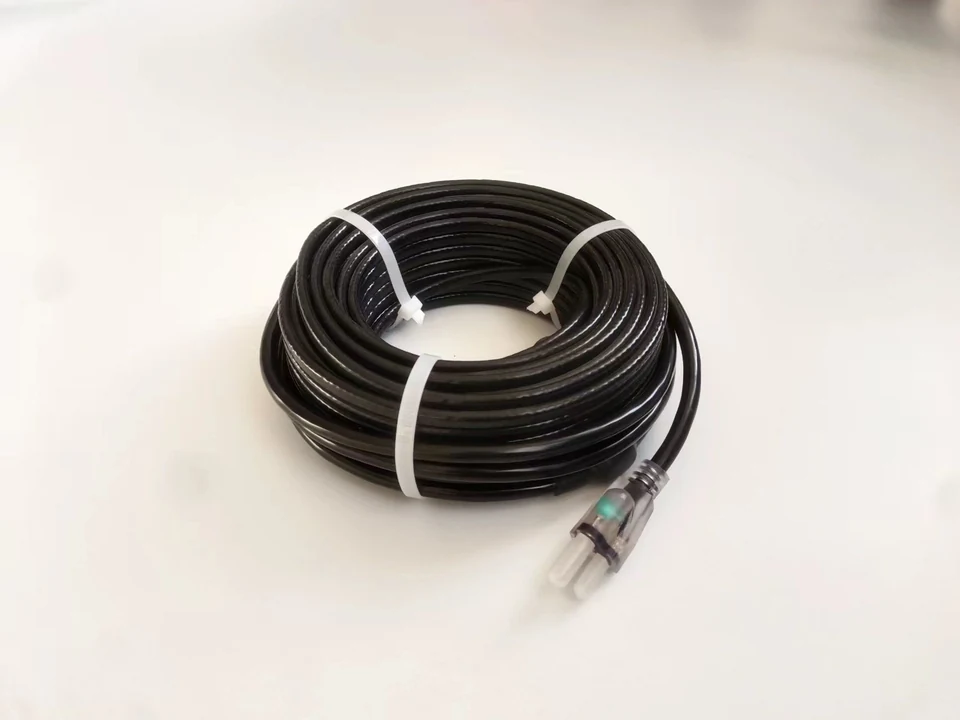
Coiled black heating cable with a molded power plug.
Product reference. Construction and finish follow the agreed specification.

About Constant-Wattage Heating Cables

A constant-wattage heating cable produces heat through an electrical resistance element without the local self-adjusting response of a self-regulating polymer core. Its nominal duty is defined for specified electrical and operating conditions; temperature control remains a system function. Parallel designs distribute heating zones along supply conductors, while series designs pass current through a resistance path whose total length and resistance determine the load. These constructions should not be combined under one installation rule, especially when deciding whether a supplied cable can be shortened.

Parallel-zone and series-resistance constructions behave differently during sizing and installation. Specify the electrical circuit and thermal duty together before selecting a cable.

Product Configurations

Parallel-zone cable

Heating sections connect across parallel supply conductors. Some designs permit on-site length selection at defined zone intervals, with specific end allowances and termination requirements rather than unrestricted cutting.

Enquire about this configuration

Series-resistance cable

The complete heating length forms part of the electrical design. Length, conductor resistance, voltage and load are considered together, making a site dimension change a reason to reassess the assembly.

Enquire about this configuration

Single-phase circuit arrangements

A project may use a suitable single-phase supply and corresponding cable arrangement. Confirm the actual circuit voltage, required load and supply points rather than specifying only a familiar model prefix.

Enquire about this configuration

Three-phase circuit arrangements

Industrial projects may use a designed three-phase heating circuit. Phase configuration, load distribution and termination details belong on the engineering schedule and cannot be inferred from the cable's appearance.

Enquire about this configuration

Silicone-insulated constant-wattage cable

An alloy resistance-heating construction with silicone insulation provides a line-heating format distinct from a silicone rubber heating sheet. Define the heated length, supply, circuit design and external pipe or instrument installation before selecting the assembly.

Enquire about this configuration

Higher-exposure parallel constructions

For duties with elevated exposure, assess the specific insulation and jacket alongside normal maintain temperature and any cleaning or steam-out cycle. Confirm powered and unpowered exposure limits for the selected construction.

Enquire about this configuration
Coiled black heating cable with a molded power plug.

Customize for Your Application

Output distribution

Discuss heat loss at valves, fittings and equipment transitions. Uniform nominal cable output does not guarantee identical temperatures where the installation loses different amounts of heat.

Assembly length

Freeze the route dimensions and lead positions before ordering a series assembly. For a parallel cable, review how the heating-zone arrangement affects usable ends and finished length.

Construction materials

Choose insulation and sheath or jacket requirements from operating temperature, moisture and chemicals. A material designation is more useful than an unverified equivalent to another supplier's model.

Temperature management

Define operating control, sensor positions and the consequences of a failed controller or lost heat transfer. This supports a practical discussion of monitoring and independent temperature limitation.

Marine and offshore installation conditions

Where a circuit serves shipboard or offshore equipment, describe moisture, salt, mechanical exposure and the required documentation. Those operating conditions do not establish a marine approval for a generic cable.

Technical Information to Specify

Share these details with your inquiry. Product ratings and operating limits are confirmed for the selected configuration.

What to specifyUnit / formatSelection guidance
Heating dutyW/m; WState the calculated heat loss and total thermal duty, including fittings and supports. Identify whether the task is temperature maintenance, warm-up or both.
Target and limiting temperatures°CProvide the required surface or process temperature, permissible variation and highest allowable cable or substrate temperature. These values inform control and protection design.
Electrical supplyV; phases; HzIdentify the actual available circuit supply and any site restrictions. A resistance heater must be selected for that supply, not merely a market's nominal voltage label.
Circuit geometrymSupply heated length, non-heating lead length, branches and power locations. Identify which dimensions are fixed and which may change before installation.
Cable constructionparallel; seriesSelect the electrical construction before discussing cutting or splicing. For parallel designs, confirm zone length; for series designs, confirm the designed resistance and assembly length.
Insulation and contactmaterial; mmDescribe the pipe or equipment material, insulation type and thickness, and how the cable transfers heat to the surface. Poor contact changes local thermal conditions.
Control and exposuresensor; °CList the normal control sensor, any independent limiting function, maximum cleaning exposure and classified-area requirements. These are separate from the nominal power rating.
Heating duty
W/m; W

State the calculated heat loss and total thermal duty, including fittings and supports. Identify whether the task is temperature maintenance, warm-up or both.

Target and limiting temperatures
°C

Provide the required surface or process temperature, permissible variation and highest allowable cable or substrate temperature. These values inform control and protection design.

Electrical supply
V; phases; Hz

Identify the actual available circuit supply and any site restrictions. A resistance heater must be selected for that supply, not merely a market's nominal voltage label.

Circuit geometry
m

Supply heated length, non-heating lead length, branches and power locations. Identify which dimensions are fixed and which may change before installation.

Cable construction
parallel; series

Select the electrical construction before discussing cutting or splicing. For parallel designs, confirm zone length; for series designs, confirm the designed resistance and assembly length.

Insulation and contact
material; mm

Describe the pipe or equipment material, insulation type and thickness, and how the cable transfers heat to the surface. Poor contact changes local thermal conditions.

Control and exposure
sensor; °C

List the normal control sensor, any independent limiting function, maximum cleaning exposure and classified-area requirements. These are separate from the nominal power rating.

Operating Limits to Check

  • Constant-wattage cables do not locally reduce output in the same way as self-regulating cables.
  • Cutting, crossing and overlap permissions are construction-specific and must follow the final installation documentation.
  • A cable model or insulation suffix does not establish hazardous-area certification or a permitted operating temperature.

Typical Applications

Process pipe temperature maintenance

Maintain suitable insulated process lines using an engineered resistance-heating circuit. Heat loss, pipe material and temperature control determine the design rather than nominal cable wattage alone.

Long fixed routes

Consider series-resistance heating for long, dimensionally defined pipe runs where circuit design and available power locations favour this construction. Route changes must remain under engineering review.

Equipment surface heating

Heat compatible equipment surfaces with a planned cable route and consistent thermal contact. Local heat sinks, removable components and access for maintenance need to be included.

How to Select the Right Configuration

Choose the electrical construction first

Decide whether the route suits a parallel-zone cable or a designed series circuit. Record the reason, including route length, available supplies, likely dimensional changes and maintenance arrangements.

Calculate the thermal and electrical duty

Combine the heat-loss calculation with the intended voltage and cable resistance or nominal zone output. Check the high-temperature condition as well as the cold condition; greater power is not automatically a better design.

Specify control and installation boundaries

Agree the sensor function, permissible surface temperature, cable spacing and termination arrangement. Request a circuit schedule that identifies the approved dimensions and electrical duty for each installed run.

Discuss Your Constant-Wattage Cable Requirement

Send your application details, drawing and planned quantity. We can review the configuration and the information needed for a quotation.

Frequently Asked Questions

No. Constant wattage describes the heating characteristic under specified conditions, not a controlled pipe temperature. The pipe temperature depends on heat loss, thermal contact, fluid conditions and switching. A properly selected sensor and controller manage the desired operating temperature within the system's designed limits.
Their rules are different. A parallel-zone design may allow cutting at defined positions with a specified non-heating allowance. A series assembly depends on its designed length and resistance. Do not shorten it as a routine installation adjustment; obtain a revised design or correctly sized assembly.
For a given electrical resistance, changing the applied voltage changes the heat generated. A cable designed for one circuit supply is therefore not automatically suitable for another. Provide the measured or specified supply, phase arrangement and tolerances so the duty can be checked before manufacture or selection.
Review mineral-insulated construction when the required temperature, mechanical environment or material compatibility exceeds the documented limits of a proposed polymer-insulated cable. The decision requires a complete comparison, including sheath temperature, corrosion, terminations and circuit design. A higher-temperature label alone is not sufficient to choose a replacement.
Order quantities are agreed for each custom project. Contact VELHEAT with your intended configuration and planned quantity so these can be discussed together.
Technical references

These references explain heating principles. Confirm the ratings, approvals and operating limits of the proposed VELHEAT configuration in its own documentation.

WhatsApp