VELHEAT

Fluid & Tank Electric Heaters

A fluid or tank electric heater transfers resistance heat into a process liquid through a compatible heating surface.

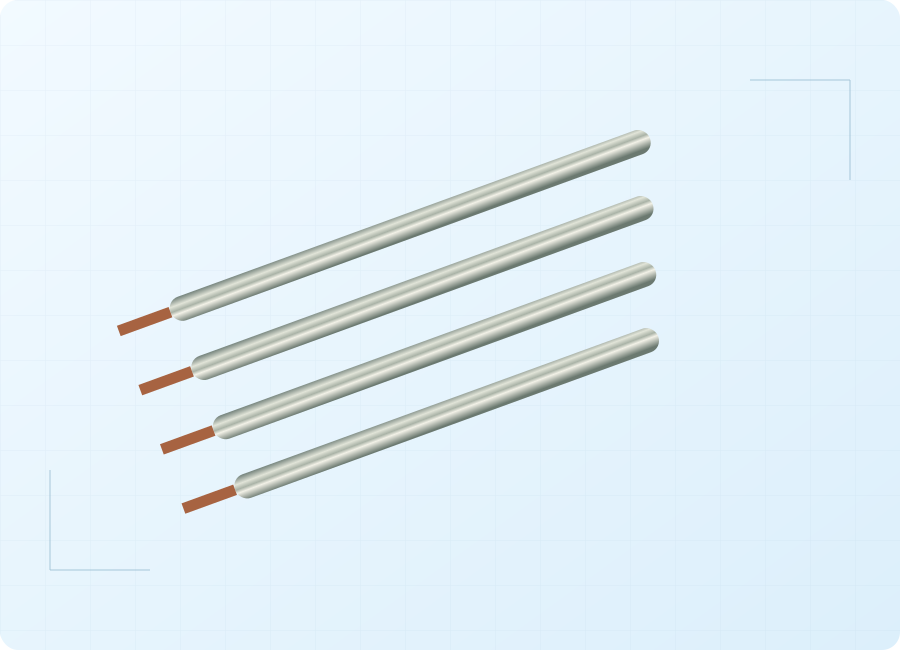
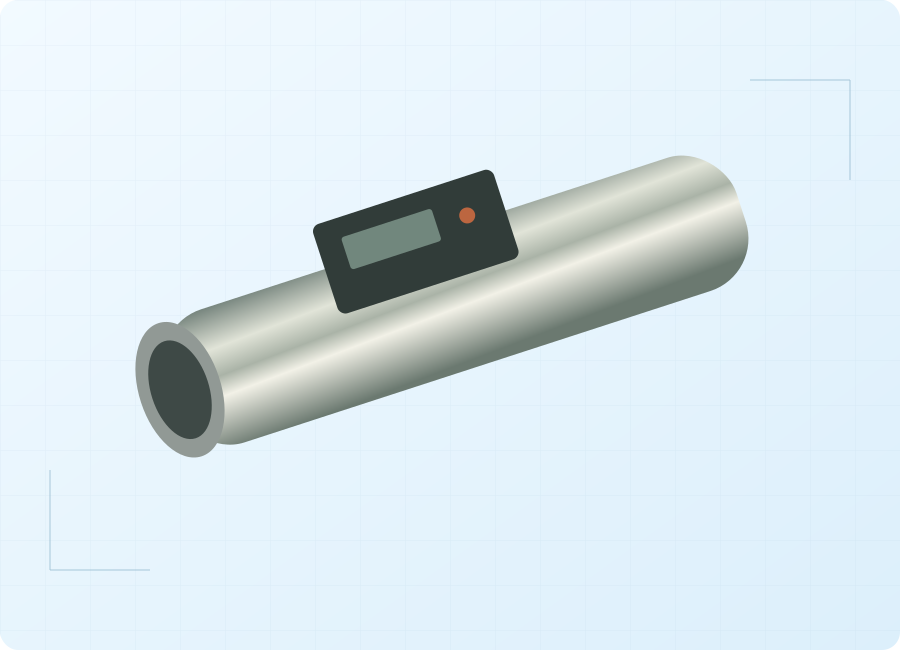
Fluid & Tank Electric Heaters — conceptual product-form illustration
Product-form illustration. Final construction follows the agreed specification.

About Fluid & Tank Electric Heaters

A fluid or tank electric heater transfers resistance heat into a process liquid through a compatible heating surface. An immersion assembly heats liquid inside a vessel; a circulation arrangement heats liquid passing through a chamber; a suction heater concentrates heat near a withdrawal point. These arrangements answer different process needs. Selection depends on the liquid's allowable surface temperature, viscosity, chemistry and movement around the elements. A target tank temperature alone does not establish a suitable heater, because the element surface can be substantially hotter than the bulk fluid.

Start with fluid properties, operating level and the heating duty, then define the element arrangement and protection strategy for bulk heating, localized withdrawal heating or a circulating thermal-fluid system.

Product Configurations

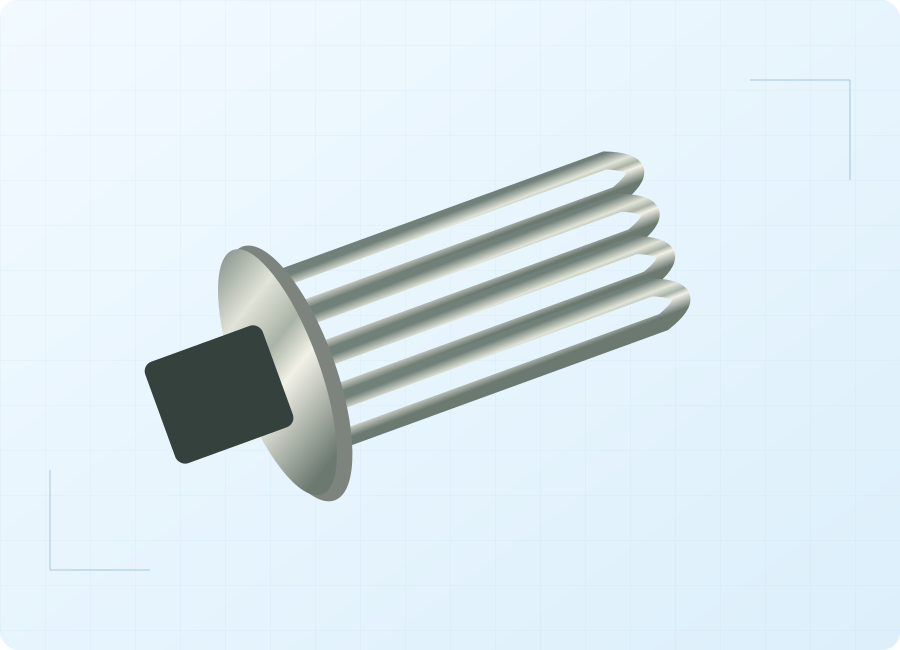
Tank immersion assemblies

For heating liquid within a storage or process vessel. Define the mounting connection, immersed length, minimum liquid level and withdrawal clearance before considering the element bundle and electrical duty.

Enquire about this configuration

Over-the-top immersion arrangements

An entry through the upper vessel opening can position heating elements below the liquid surface. Review the access opening, supports and complete insertion path against the tank drawing.

Enquire about this configuration

Suction and withdrawal heaters

Local heating around the withdrawal region can address viscosity at pump-out. Specify the required outlet condition and flow, since this duty differs from bringing the entire stored volume to temperature.

Enquire about this configuration

Thermal-fluid circulation heaters

For a pumped heat-transfer-fluid loop serving a process load. The heater, circulation conditions, expansion provision and controls must be assessed together using the selected fluid's technical data.

Enquire about this configuration

Tubular-element drum heating equipment

For a drum-heating arrangement using tubular heating elements, specify the vessel interface and how heat reaches the contents. This construction differs from a flexible silicone drum wrap and needs its own mounting, surface-temperature and operating-condition review.

Enquire about this configuration

Withdrawable-element tank arrangements

Where the equipment design allows the heating elements to be withdrawn for service, define the isolation tube or other process boundary and the available removal clearance. Confirm the exact construction and maintenance procedure before assuming elements can be removed while the vessel remains in service.

Enquire about this configuration
Fluid & Tank Electric Heaters — conceptual product-form illustration

Customize for Your Application

Wetted-material review

Discuss the sheath, connection and seal materials against the complete fluid composition and cleaning method. A generic stainless-steel description is insufficient for a corrosive process.

Bundle geometry

Use the vessel drawing to discuss heated length, inactive zones and clearance from walls, sediment and moving parts. Keep elements within the defined operating liquid envelope.

Heat distribution

Compare whole-vessel heating with localized outlet heating. Record mixing conditions and any regions where the product can stagnate or accumulate deposits.

Control responsibilities

Separate routine process regulation from independent temperature protection and low-level or low-flow shutdown. Allocate each sensor and interlock to the heater package or plant system.

Technical Information to Specify

Share these details with your inquiry. Product ratings and operating limits are confirmed for the selected configuration.

What to specifyUnit / formatSelection guidance
Fluid identity and conditioncomposition / viscosityProvide the exact fluid, concentration, contamination and viscosity across startup and operating conditions.
Heating dutykW / L / minState liquid volume or flow, starting temperature, target temperature and required warm-up time.
Process temperature°CDistinguish normal bulk temperature, maximum permitted fluid film temperature and upset conditions.
Pressure and connectionbar / mmProvide design pressure, connection standard, opening dimensions and mounting orientation.
Element surface loadingW/cm²Assess allowable loading using fluid sensitivity, circulation, deposits and sheath compatibility.
Power supplyV / Hz / phaseIdentify the site supply, available electrical capacity and preferred staging or modulation interface.
Liquid coverage and flowmm / L/minDefine minimum operating level or circulation and how those conditions will be monitored.
Service envelopemmShow tank internals, supports, terminal access and the space needed to remove the complete assembly.
Fluid identity and condition
composition / viscosity

Provide the exact fluid, concentration, contamination and viscosity across startup and operating conditions.

Heating duty
kW / L / min

State liquid volume or flow, starting temperature, target temperature and required warm-up time.

Process temperature
°C

Distinguish normal bulk temperature, maximum permitted fluid film temperature and upset conditions.

Pressure and connection
bar / mm

Provide design pressure, connection standard, opening dimensions and mounting orientation.

Element surface loading
W/cm²

Assess allowable loading using fluid sensitivity, circulation, deposits and sheath compatibility.

Power supply
V / Hz / phase

Identify the site supply, available electrical capacity and preferred staging or modulation interface.

Liquid coverage and flow
mm / L/min

Define minimum operating level or circulation and how those conditions will be monitored.

Service envelope
mm

Show tank internals, supports, terminal access and the space needed to remove the complete assembly.

Operating Limits to Check

  • The heated section must remain within its approved liquid-coverage or circulation conditions.
  • A hazardous-area application requires an appropriately evaluated assembly; the product name alone establishes no explosion-protection approval.
  • Fluid decomposition, fouling and corrosion limits must be assessed separately from the requested bulk temperature.

Typical Applications

Process-liquid vessels

For batches that need controlled warming or temperature maintenance. Include vessel losses, product changes and cleaning cycles so the heater specification reflects more than the normal production temperature.

Oil storage and withdrawal

For viscosity management during storage or pump-out. Identify whether the process needs a warm bulk volume or a locally heated withdrawal stream before selecting the arrangement.

Thermal-fluid process loops

For transferring heat to remote equipment through a circulating fluid. Assess heater loading alongside the fluid's film-temperature limit, pump behavior and process demand at reduced flow.

How to Select the Right Configuration

Define the useful heat

Separate heat needed for warm-up from heat needed to offset vessel losses or continuously heat an incoming stream. Provide the process schedule and the electrical capacity available during startup.

Check the liquid-to-element interface

Evaluate fluid chemistry, deposits and local flow before choosing a surface loading. Check the lowest liquid level and the conditions that could expose a heated section.

Review the complete installation

Confirm pressure connections, supports, service access and the shutdown conditions on one drawing. For a classified location, establish the required equipment approval scope before a design is selected.

Discuss Your Fluid & tank heaters Requirement

Send your application details, drawing and planned quantity. We can review the configuration and the information needed for a quotation.

Frequently Asked Questions

A suction arrangement focuses heat near the liquid withdrawal path, often where viscosity affects pump-out. A general immersion assembly may serve a larger bulk-heating duty. Compare the required outlet flow and temperature with the desired tank temperature; the two approaches should not be selected by matching electrical power alone.
Total power describes the overall heat input, while watt density describes how concentrated that input is at the heating surface. A sensitive or poorly circulating liquid can overheat locally even when the bulk temperature remains acceptable. Specify both the duty and the fluid conditions around the elements.
Do not assume interchangeability. The fluids differ in heat transfer, chemistry and allowable film temperature. An assembly also has a particular sheath, surface loading, control arrangement and design pressure. A change of medium requires a fresh application review rather than simply changing the temperature setpoint.
Send the vessel drawing, fluid data sheet, operating levels, pressure, supply and heating schedule. Add the required connection standard, service clearance and site classification where relevant. These inputs let the inquiry address the actual assembly and its controls instead of producing a price for an unspecified heating element.
Order quantities are agreed for each custom project. Contact VELHEAT with your intended configuration and planned quantity so these can be discussed together.
Technical references

These references explain heating principles. Confirm the ratings, approvals and operating limits of the proposed VELHEAT configuration in its own documentation.

  • Selecting Watt Density

    General relationship between watt density, medium, flow and sheath temperature; no supplier ratings adopted.

WhatsApp