VELHEAT

Hydronic Auxiliary Heaters

A hydronic auxiliary electric heater supplies supplementary resistance heat to a circulating water or compatible water-glycol loop used for space heating.

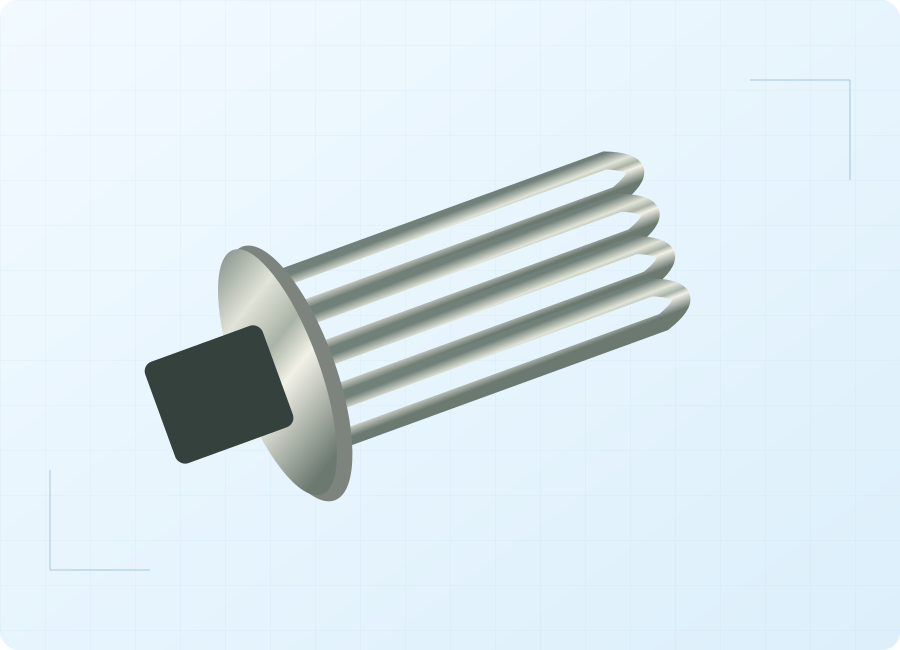
Hydronic Auxiliary Heaters — conceptual product-form illustration
Product-form illustration. Final construction follows the agreed specification.

About Hydronic Auxiliary Heaters

A hydronic auxiliary electric heater supplies supplementary resistance heat to a circulating water or compatible water-glycol loop used for space heating. It can support an air-to-water heat pump or another primary heat source under defined operating conditions. Selection starts with the required extra heat at the system design point, then considers flow, pressure, fluid composition and controls. The assembly is part of the water side of HVAC equipment. Its function is distinct from heating ventilation air directly and from maintaining the temperature of domestic hot-water distribution pipes.

Build the specification around the heat shortfall, circulating fluid and control sequence, including how the auxiliary heater cooperates with the primary heat source.

Product Configurations

Heat-pump supplementary heating

For a hydronic system that needs additional output under specific conditions. Define the heat-pump contribution and remaining load at the same outdoor and water temperatures before assigning auxiliary capacity.

Enquire about this configuration

Central HVAC water-loop assistance

For adding heat to a central heating-water circuit. State the supply and return requirements, connected emitters and hydraulic arrangement so the heater specification follows the actual system duty.

Enquire about this configuration

Cold-start heating support

For a system sequence that calls for electrical assistance during warm-up. Specify the initial fluid temperature, permitted warm-up profile and the conditions for handing control back to the main source.

Enquire about this configuration
Hydronic Auxiliary Heaters — conceptual product-form illustration

Customize for Your Application

Hydraulic integration

Discuss the heater location using the complete circuit diagram, including pumps, buffer vessels, bypasses and zone valves. Confirm which operating states preserve the required circulation.

Capacity and staging

Compare the auxiliary load profile with electrical capacity and the system's permitted temperature variation. The requested heat should reflect the shortfall under defined conditions rather than an arbitrary replacement for the main source.

Controls coordination

Define when supplemental heat becomes available and how it reduces as the primary source recovers. Agree the sensor locations and controller responsibilities to avoid conflicting temperature demands.

Fluid and service requirements

Review wetted materials against water treatment and glycol data. Include isolation and service access in the equipment layout, with provisions established by the system designer.

Technical Information to Specify

Share these details with your inquiry. Product ratings and operating limits are confirmed for the selected configuration.

What to specifyUnit / formatSelection guidance
Supplemental heating dutykWProvide the required extra capacity and the conditions at which the main source cannot meet the load.
Water temperatures°CState design supply, return, cold-start and maximum permitted temperatures.
Circulating flowL/min / m³/hGive normal and minimum flow and describe changes caused by pumps, valves or operating zones.
Fluid composition% / fluid gradeIdentify water treatment and glycol type and concentration, where used, rather than stating only antifreeze.
Hydraulic conditionsbar / kPaSupply working and design pressure plus the pressure-drop allowance for the heater assembly.
Connections and accessmm / connection standardShow pipe connections, orientation, service clearances and the intended position in the hydraulic circuit.
Electrical capacityV / Hz / phase / kWDefine the available supply and any demand limit that restricts auxiliary-heater operation.
Enable and regulation signalssignal / sequenceDescribe the controller's heat request, flow proof, temperature feedback and fault-handling responsibilities.
Supplemental heating duty
kW

Provide the required extra capacity and the conditions at which the main source cannot meet the load.

Water temperatures
°C

State design supply, return, cold-start and maximum permitted temperatures.

Circulating flow
L/min / m³/h

Give normal and minimum flow and describe changes caused by pumps, valves or operating zones.

Fluid composition
% / fluid grade

Identify water treatment and glycol type and concentration, where used, rather than stating only antifreeze.

Hydraulic conditions
bar / kPa

Supply working and design pressure plus the pressure-drop allowance for the heater assembly.

Connections and access
mm / connection standard

Show pipe connections, orientation, service clearances and the intended position in the hydraulic circuit.

Electrical capacity
V / Hz / phase / kW

Define the available supply and any demand limit that restricts auxiliary-heater operation.

Enable and regulation signals
signal / sequence

Describe the controller's heat request, flow proof, temperature feedback and fault-handling responsibilities.

Operating Limits to Check

  • Fluid circulation and independent temperature protection remain necessary parts of the system design.
  • Glycol type and concentration must be assessed against the selected assembly and hydraulic calculation.
  • Closed-loop HVAC suitability does not imply potable-water approval or compatibility with every heat-pump controller.

Typical Applications

Air-to-water heat-pump systems

For a documented heating shortfall at particular operating conditions. Selection should use the heat-pump output and building demand at matching temperatures, together with the planned auxiliary control sequence.

Central hydronic space heating

For supplemental heat in an HVAC water circuit serving suitable emitters. Identify the required flow and temperature profile across the connected loads instead of relying on nominal equipment size.

Controlled system warm-up

For cold-start assistance where the plant design calls for it. Specify the fluid mass, starting condition and sequence, with circulation established before electrical heating is enabled.


How to Select the Right Configuration

Calculate the actual shortfall

Use the building load and primary-source output at the same design condition. Distinguish supplementary operation from full emergency backup, because they can require different electrical capacities and control strategies.

Confirm hydraulic compatibility

Evaluate the fluid, flow range, pressure allowance and available pump head. Review all relevant valve positions and pump modes, including situations where only a small heating zone remains active.

Write an integrated sequence

Specify heat enable, staging or modulation, circulation proof and independent overtemperature protection. Define what the system does after a fault instead of relying on a single temperature demand signal.

Discuss Your Hydronic auxiliary heaters Requirement

Send your application details, drawing and planned quantity. We can review the configuration and the information needed for a quotation.

Frequently Asked Questions

No. Supplementary capacity fills a defined gap while the primary source continues operating. Complete backup may need to carry the whole required load when that source is unavailable. State which duty is intended and identify any reduced-service condition; otherwise the same product description can conceal very different sizing requirements.
Temperature alone is insufficient. The heating requirement also depends on fluid flow and the temperature increase needed across the heater. Glycol concentration changes the fluid properties. Provide the circuit conditions and useful supplemental duty so the hydraulic and electrical requirements can be considered together.
Resistance heat supplies additional capacity; it does not itself multiply electrical input into heat as a heat pump does. System performance depends on how much energy each source supplies and when. Evaluate the auxiliary operating hours and control sequence without treating the heater as a guaranteed efficiency upgrade.
A closed-loop HVAC application does not establish suitability for drinking water. Potable-water use introduces different material, hygiene and market requirements. Identify the intended water service during the inquiry and require an assembly specifically evaluated for it rather than transferring a space-heating specification to domestic water.
Order quantities are agreed for each custom project. Contact VELHEAT with your intended configuration and planned quantity so these can be discussed together.
Technical references

These references explain heating principles. Confirm the ratings, approvals and operating limits of the proposed VELHEAT configuration in its own documentation.

  • Hydronic Backup Heater

    Inline supplemental electric heating for air-to-water hydronic heat pumps and coordination with the primary source; no proprietary ratings or performance claims adopted.

WhatsApp