VELHEAT

Roof & Gutter De-Icing

A roof and gutter de-icing system uses suitable outdoor heating cable and controls to help keep selected drainage paths open during freezing conditions.

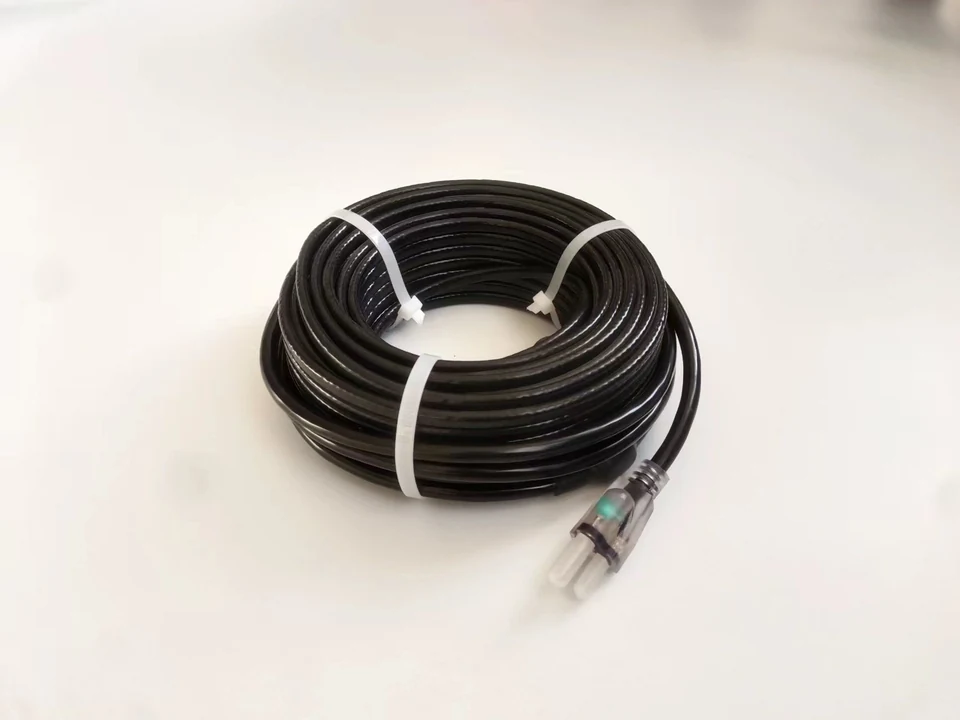
Coiled black roof and gutter de-icing cable with a two-pin power plug.
Product reference. Construction and finish follow the agreed specification.

About Roof & Gutter De-Icing

A roof and gutter de-icing system uses suitable outdoor heating cable and controls to help keep selected drainage paths open during freezing conditions. It is normally arranged around vulnerable roof sections, gutters, valleys and downpipes rather than intended to melt all snow across an entire roof. Effective design follows the water to a suitable discharge point. The heater, attachment method, moisture exposure and control arrangement must be assessed for the particular roof. Pipe-freeze and indoor-floor cables are not automatically suitable substitutes.

The objective is a connected meltwater path through vulnerable roof edges, gutters and downpipes. Roof material, drainage geometry and weather exposure matter as much as the total cable length.

Product Configurations

Self-regulating roof cable

A suitable self-regulating construction adjusts local output as the cable temperature changes. Roof use still requires documented weather resistance, appropriate connections and a circuit design for the starting conditions.

Enquire about this configuration

Constant-wattage de-icing cable

An application-specific resistance cable provides a defined heating arrangement with suitable control. A fixed-length assembly must fit the planned route without shortening or concealing excess heated cable.

Enquire about this configuration

Finished roof and gutter kits

A defined assembly may suit a straightforward project when its length, connection format and permitted roofing materials match the installation. Kit selection still starts with a drainage-route survey.

Enquire about this configuration

Engineered multi-circuit systems

Complex roofs and multiple downpipes may need separate heating circuits and coordinated control. Circuit division should preserve the drainage strategy while respecting power, connection and access requirements.

Enquire about this configuration
Coiled black roof and gutter de-icing cable with a two-pin power plug.

Customize for Your Application

Connected meltwater route

Trace the water from the vulnerable roof area to its final discharge. Heating one gutter segment while leaving a downstream obstruction can leave the drainage problem unresolved.

Roof-compatible attachment

Discuss the roofing material and warranty constraints with the building team. Fasteners and clips must be selected for the installation instead of treating attachment as a generic accessory.

Circuit and sensor zoning

Consider shaded areas, different roof orientations and separated drainage runs. The control arrangement should reflect those conditions without leaving critical drainage sections disconnected from the strategy.

Access and maintenance documentation

Plan accessible connections, circuit identification and drawings that show the installed route. The building team needs to inspect the system and clean drainage paths without damaging the heater.

Technical Information to Specify

Share these details with your inquiry. Product ratings and operating limits are confirmed for the selected configuration.

What to specifyUnit / formatSelection guidance
Roof and drainage geometrydrawing; mProvide roof plans or measured sketches showing eaves, valleys, gutters, downpipes and discharge points. Include levels and transitions where meltwater can refreeze.
Roof covering and gutter materialmaterial; finishIdentify membrane, tile, metal or other roof construction, plus gutter and downpipe materials. Confirm compatibility of cable contact and attachment with the roofing system.
Winter design conditions°C; site informationState the location and relevant snow, ice, wind and shading conditions. Describe the recurring problem so the design targets its cause and drainage route.
Heated route and circuit lengthmInclude roof-edge coverage, gutter runs and vertical downpipes. Required cable length is not simply the length of the gutter measured along the building.
Electrical supply and connectionsV; circuitsShow available power positions and accessible connection locations. Define the complete circuit and protection arrangement for the selected outdoor system.
Attachments and structural interfacemethod; roof approvalIdentify permitted fixing methods and restrictions on penetrating the roof. Attachment design must consider roof integrity, cable support and snow or ice movement.
Control and sensingtemperature; moisture inputsDescribe whether control uses temperature alone or combines weather inputs. Positioning and system logic should reflect the actual roof conditions and operating objective.
Roof and drainage geometry
drawing; m

Provide roof plans or measured sketches showing eaves, valleys, gutters, downpipes and discharge points. Include levels and transitions where meltwater can refreeze.

Roof covering and gutter material
material; finish

Identify membrane, tile, metal or other roof construction, plus gutter and downpipe materials. Confirm compatibility of cable contact and attachment with the roofing system.

Winter design conditions
°C; site information

State the location and relevant snow, ice, wind and shading conditions. Describe the recurring problem so the design targets its cause and drainage route.

Heated route and circuit length
m

Include roof-edge coverage, gutter runs and vertical downpipes. Required cable length is not simply the length of the gutter measured along the building.

Electrical supply and connections
V; circuits

Show available power positions and accessible connection locations. Define the complete circuit and protection arrangement for the selected outdoor system.

Attachments and structural interface
method; roof approval

Identify permitted fixing methods and restrictions on penetrating the roof. Attachment design must consider roof integrity, cable support and snow or ice movement.

Control and sensing
temperature; moisture inputs

Describe whether control uses temperature alone or combines weather inputs. Positioning and system logic should reflect the actual roof conditions and operating objective.

Operating Limits to Check

  • A drainage-path heating system does not establish whole-roof snow removal, structural snow-load safety or a remedy for every ice-dam cause.
  • Cable, attachments and connections must be compatible with the roof materials and the particular outdoor conditions.
  • No fixed cable-to-gutter ratio or universal energy-use claim applies to every roof geometry and climate.

Typical Applications

Vulnerable eaves and roof edges

Create a designed path through selected areas where meltwater can encounter freezing conditions near the edge. The route should connect to the intended gutter or discharge system.

Gutters and downpipes

Help keep a continuous drainage route available where accumulated ice obstructs water movement. Include vertical sections and the discharge condition rather than heating only the visible gutter.

Complex roof valleys and transitions

Evaluate valleys, roof-level changes and shaded drainage sections that concentrate meltwater. A drawing of the complete roof is needed to understand how each local area connects downstream.

How to Select the Right Configuration

Survey the ice and water pattern

Record where water forms, where it collects and where it stops draining. Photographs, roof drawings and measurements help distinguish a heat-tracing need from blocked drainage or a building-envelope defect.

Design the entire drainage path

Select the roof, gutter and downpipe sections that need coordinated protection. Check cable construction, attachments, circuit lengths and the discharge point together before calculating the material schedule.

Specify weather control and upkeep

Agree the sensing method and operating logic with the designer, then plan pre-season inspection and drainage cleaning. Heating cannot compensate for every blockage or failed roof detail.

Discuss Your Roof & Gutter De-Icing Requirement

Send your application details, drawing and planned quantity. We can review the configuration and the information needed for a quotation.

Frequently Asked Questions

That is not the normal objective of a roof and gutter de-icing design. The system creates selected routes for meltwater to drain. Whole-roof snow removal and structural snow-load management are different questions, and should not be promised from a cable layout intended only to protect drainage paths.
Water leaving a heated roof or gutter can refreeze farther downstream. If the downpipe or discharge point remains blocked, heating an upstream section may not restore drainage. Assess the complete water route and its exposure rather than selecting cable only from the length of the horizontal gutter.
Only if the specific assembly explicitly permits that application. Roof service introduces sunlight, weather, water, attachment and mechanical conditions that may differ from insulated pipe service. The cable, joints, connection lead and control arrangement must all be suitable for the intended outdoor roof installation.
It may be appropriate for some specified systems, but air temperature alone does not show whether snow, ice or moisture is present. A design may combine temperature and moisture sensing to manage operation. The choice depends on the roof conditions, control objective and compatible system components.
Order quantities are agreed for each custom project. Contact VELHEAT with your intended configuration and planned quantity so these can be discussed together.
Technical references

These references explain heating principles. Confirm the ratings, approvals and operating limits of the proposed VELHEAT configuration in its own documentation.

WhatsApp