VELHEAT

Mineral-Insulated Heating Cables

A mineral-insulated heating cable places a resistance conductor inside a metal sheath, separated by compacted mineral insulation.

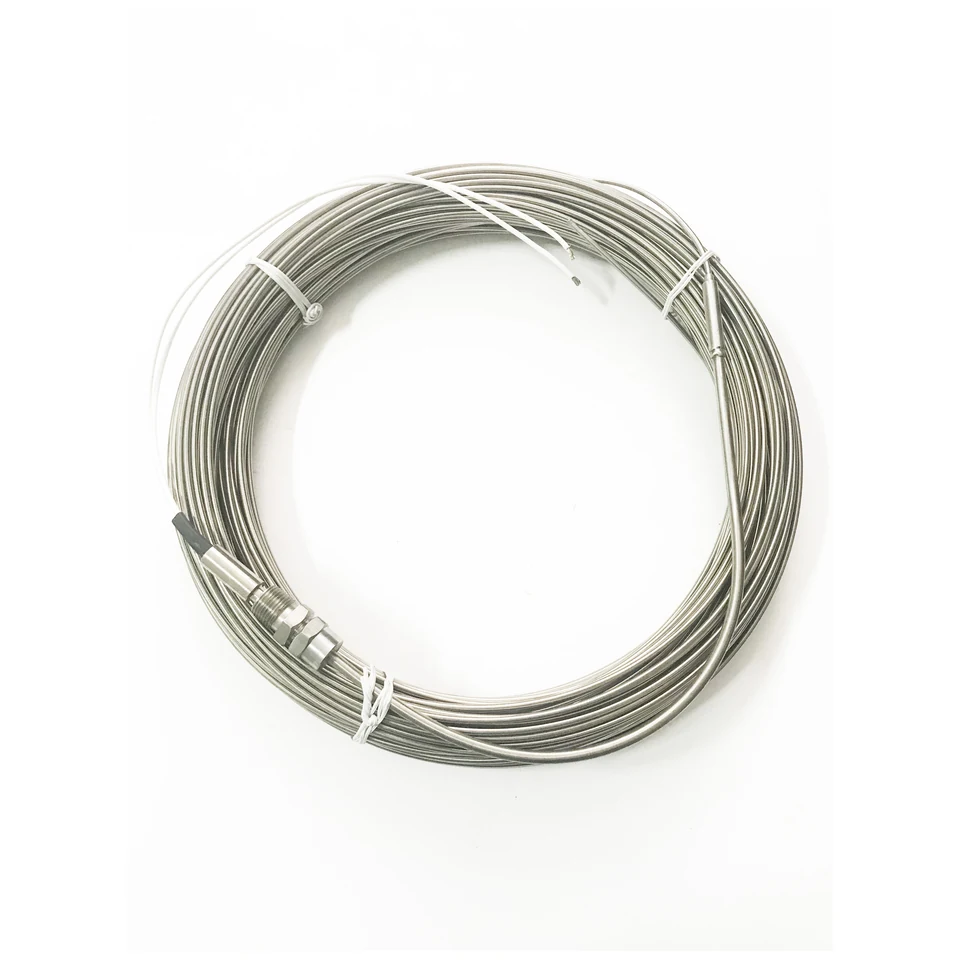
Coiled mineral-insulated heating cable with white leads and threaded fittings.
Product reference. Construction and finish follow the agreed specification.

About Mineral-Insulated Heating Cables

A mineral-insulated heating cable places a resistance conductor inside a metal sheath, separated by compacted mineral insulation. Unlike a polymer-jacketed trace heater, its material system is based on inorganic insulation and a metallic outer barrier. The finished heater normally includes a defined heated section and non-heating connections appropriate to the circuit. MI construction can support demanding industrial duties, but it does not mean every sheath material has the same temperature or corrosion capability. Selection must consider the entire assembly, including joints and terminations.

The metal sheath, electrical resistance, heated length and cold-lead arrangement all affect suitability. A complete operating-temperature and corrosion profile is more useful than a single maximum-temperature request.

Product Configurations

Copper-sheathed assemblies

A copper sheath is one construction option for suitable duties. Its compatibility, temperature limits and mechanical requirements must be checked against the application rather than inferred from the MI label.

Enquire about this configuration

Stainless-steel-sheathed assemblies

A stainless outer sheath can be considered where the selected grade suits the environment. Specify the actual chemicals and operating temperatures; stainless steel is not universally resistant to every corrosive medium.

Enquire about this configuration

Nickel-alloy-sheathed assemblies

Nickel-alloy constructions are relevant to demanding thermal or corrosion conditions. Identify the alloy and service exposure in the enquiry instead of treating all high-temperature metal sheaths as interchangeable.

Enquire about this configuration

Application-sized heater sets

A finished heater set combines a calculated resistance and heated length with the required cold leads and terminations. Its electrical and dimensional identity is part of the specification, not an accessory detail.

Enquire about this configuration

Copper-nickel-sheathed assemblies

A copper-nickel sheath is another material option to assess against process exposure and compatibility. It must be selected using the exact material specification and heater design, rather than treating all metallic sheaths as interchangeable.

Enquire about this configuration
Coiled mineral-insulated heating cable with white leads and threaded fittings.

Customize for Your Application

Heater-set geometry

Use a dimensioned drawing to locate the active section and cold leads. Keep joints and termination positions accessible and appropriate to their permitted temperature environment.

Sheath material selection

Assess corrosion and temperature together. A sheath that tolerates the target temperature may still be unsuitable for the process chemicals or surrounding installation materials.

Heat distribution and attachment

Discuss the contact method, spacing and equipment geometry. The target is a suitable heat-transfer path without assuming that high cable output produces a uniform equipment temperature.

Identification and replacement

Define the information required on assembly labels and circuit records. Replacement should preserve the approved length, resistance, voltage and material combination, not just the outside diameter.

Single-core and twin-core layouts

Discuss conductor arrangement, the required return path, cold leads and sealed transitions as one heater set. A change in core arrangement can change both the connection layout and the circuit design.

Technical Information to Specify

Share these details with your inquiry. Product ratings and operating limits are confirmed for the selected configuration.

What to specifyUnit / formatSelection guidance
Required heat inputW; W/mProvide total heat duty and the required distribution along the surface. Include warm-up requirements separately if the system must raise temperature as well as maintain it.
Process and sheath conditions°CState the normal process temperature, maximum exposure and allowable equipment surface temperature. A design must also assess the cable sheath temperature under the proposed heat-transfer conditions.
Supply and circuit resistanceV; ΩIdentify the supply and any known circuit resistance requirement. The assembly's electrical rating must be matched to its heated length and intended duty.
Heated and cold-lead lengthsmDimension the heating section, both connection routes where applicable, and the distances to accessible termination locations. Distinguish heated cable from non-heating connection length.
Sheath and corrosion exposurematerial; mediumList chemicals, cleaning agents, moisture and contact materials. Request a specific sheath material evaluation rather than a generic corrosion-resistant description.
Route and bending constraintsmm; drawingSupply the route, available clearances and any repeated movement. Minimum bend limits depend on cable construction and must be agreed before installation.
Termination and area requirementsentry type; area classificationDescribe enclosure entries, site protection requirements and any hazardous-area classification. Match the documentation to the complete heater assembly and intended installation.
Required heat input
W; W/m

Provide total heat duty and the required distribution along the surface. Include warm-up requirements separately if the system must raise temperature as well as maintain it.

Process and sheath conditions
°C

State the normal process temperature, maximum exposure and allowable equipment surface temperature. A design must also assess the cable sheath temperature under the proposed heat-transfer conditions.

Supply and circuit resistance
V; Ω

Identify the supply and any known circuit resistance requirement. The assembly's electrical rating must be matched to its heated length and intended duty.

Heated and cold-lead lengths
m

Dimension the heating section, both connection routes where applicable, and the distances to accessible termination locations. Distinguish heated cable from non-heating connection length.

Sheath and corrosion exposure
material; medium

List chemicals, cleaning agents, moisture and contact materials. Request a specific sheath material evaluation rather than a generic corrosion-resistant description.

Route and bending constraints
mm; drawing

Supply the route, available clearances and any repeated movement. Minimum bend limits depend on cable construction and must be agreed before installation.

Termination and area requirements
entry type; area classification

Describe enclosure entries, site protection requirements and any hazardous-area classification. Match the documentation to the complete heater assembly and intended installation.

Operating Limits to Check

  • MI assemblies require documented bend limits and appropriate support; they are not general-purpose flexible hoses or repeatedly flexing leads.
  • Sheath, joints and terminations can have different operating constraints and must be assessed as one assembly.
  • A sheath alloy name alone does not establish hazardous-area approval, corrosion life or VELHEAT production capability.

Typical Applications

High-temperature process pipework

Evaluate MI assemblies for insulated lines whose normal or cleaning temperatures challenge other constructions. Confirm both operating conditions and intermittent exposure before choosing the sheath and heater set.

Industrial vessels and equipment

Apply engineered surface heating where equipment geometry and access permit a controlled cable route. Local contact, insulation and sensor placement are central to achieving the required duty.

Mechanically demanding installations

Consider a metal-sheathed assembly where the environment calls for a robust outer barrier. Mechanical strength does not remove bending, support, corrosion or termination requirements.

How to Select the Right Configuration

Document every temperature condition

Capture normal operation, start-up, cleaning, shutdown and loss-of-flow scenarios. Separate the fluid temperature from the calculated sheath temperature so that material selection addresses the actual thermal stresses.

Fix the route before sizing the heater

Provide a drawing with heated lengths, lead exits and connection positions. The electrical design depends on these dimensions; substituting a shorter or longer section changes more than the fit.

Review assembly compatibility

Check sheath material, joints, cold leads, control and enclosure entries together. Request product-specific documentation for any approval requirement and retain the final heater-set schedule for future maintenance.

Discuss Your Mineral-Insulated Cable Requirement

Send your application details, drawing and planned quantity. We can review the configuration and the information needed for a quotation.

Frequently Asked Questions

No. A protective metal braid or armour may surround a cable that still uses polymer insulation. MI refers to the internal mineral-insulated construction as well as its metal sheath. Confirm the construction drawing and material description instead of classifying a cable solely by the visible outer layer.
A finished MI heater set is normally designed around a specified resistance and heated length. Cutting it changes the assembly and can compromise both the electrical design and its sealed terminations. Treat a route change as an engineering revision and obtain an assembly sized for the final installation.
Cold leads carry power from the heated section to its connection location without serving as the intended heating zone. Their length, current capacity, routing and termination conditions matter to the finished set. A quotation that omits them may not describe an assembly that fits the equipment or connection enclosure.
No. An exposure limit describes a material or assembly boundary under specified conditions. Achievable maintenance temperature also depends on heat loss, available output, heat transfer and allowable sheath temperature. Review the complete thermal design rather than using an exposure number as a promised process temperature.
Order quantities are agreed for each custom project. Contact VELHEAT with your intended configuration and planned quantity so these can be discussed together.
Technical references

These references explain heating principles. Confirm the ratings, approvals and operating limits of the proposed VELHEAT configuration in its own documentation.

WhatsApp